SCI-Kanban
Overview
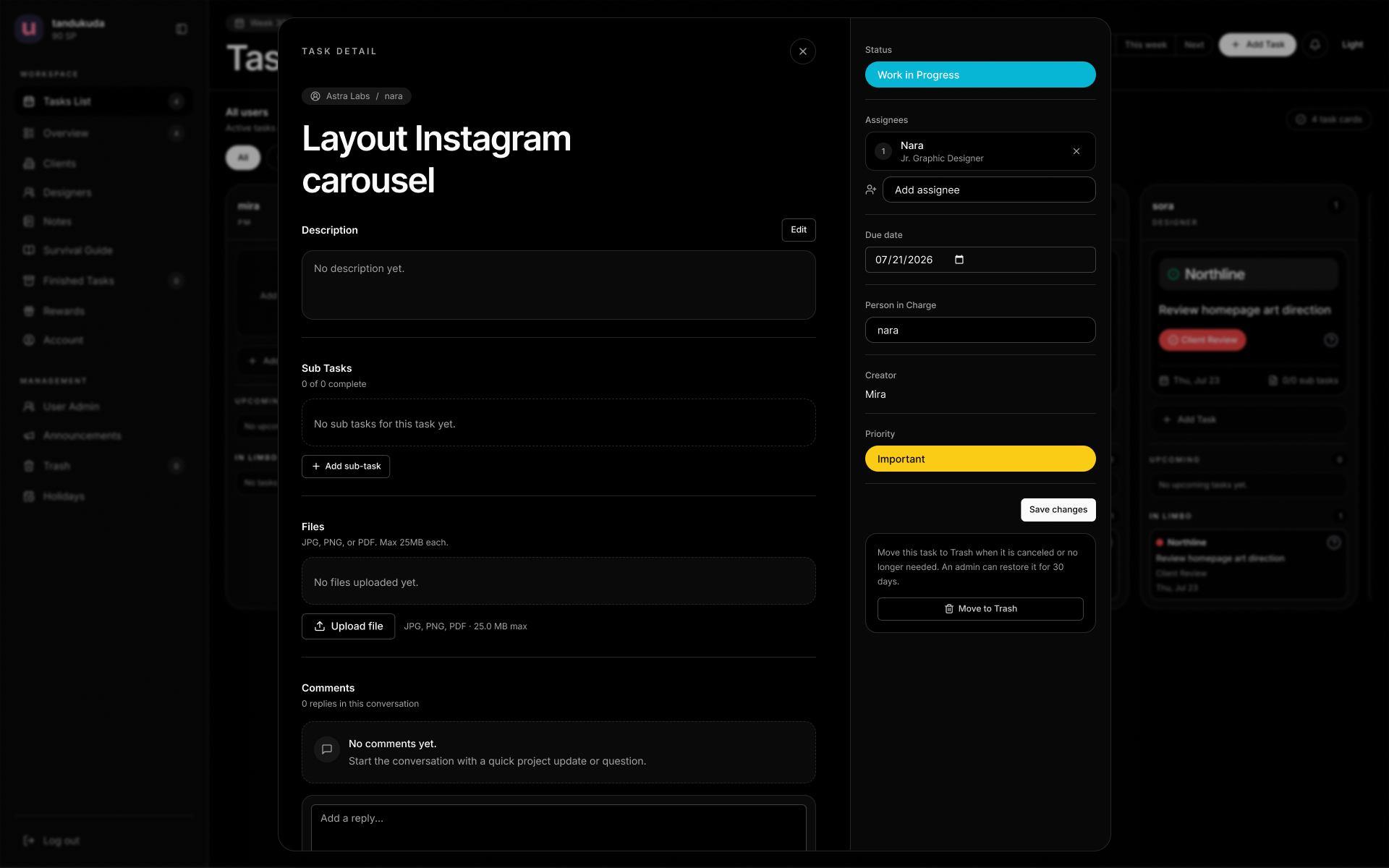
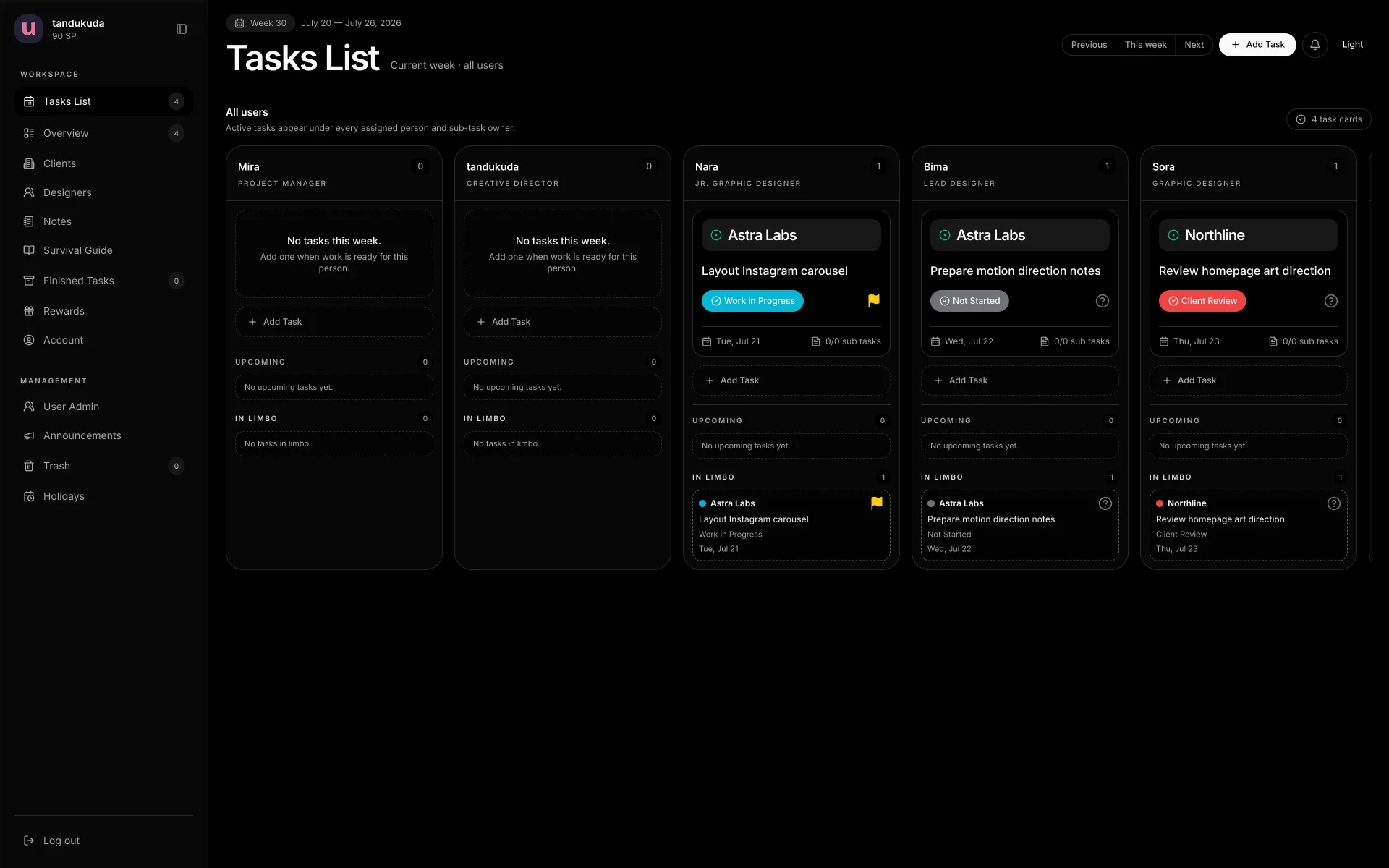
SCI-Kanban is a self-hosted project management tool designed for Sciencewerk’s internal creative workflow. It helps the team organize tasks, projects, clients, updates, files, and daily work visibility in one focused system.
The app was built for a studio environment where work moves across design, 3D, production, and project management, and where generic project management tools did not fully match the team’s day-to-day habits. As a graphic designer who also handles development, the goal was to close the gap between how the tool looked, how it felt to use, and how it was actually built and deployed.
Problem
Sciencewerk had already tried existing project management platforms, including paid tools like Asana and Monday.
The issue was not that those tools lacked features. The issue was adoption and workflow fit.
Common problems included:
- Team members not updating tasks consistently
- Project managers still needing to ask for updates manually
- Work visibility depending too much on individual habits
- Generic tools not reflecting the studio’s internal process or tone
- Project, client, file, and task context being spread across different places
This created friction in daily coordination, especially when multiple projects moved at the same time.
Approach
SCI-Kanban was designed around the studio’s actual workflow instead of copying a generic kanban template.
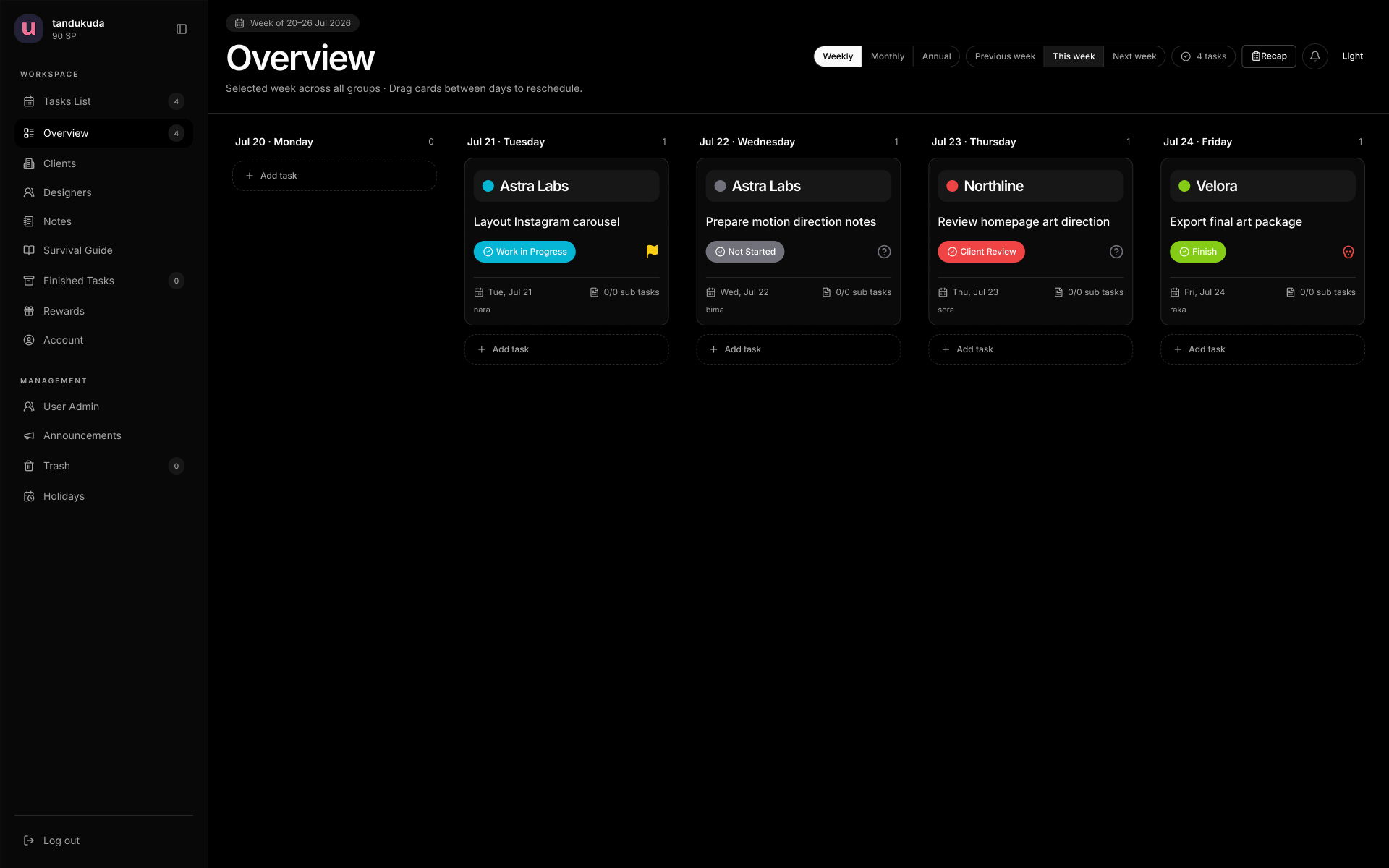
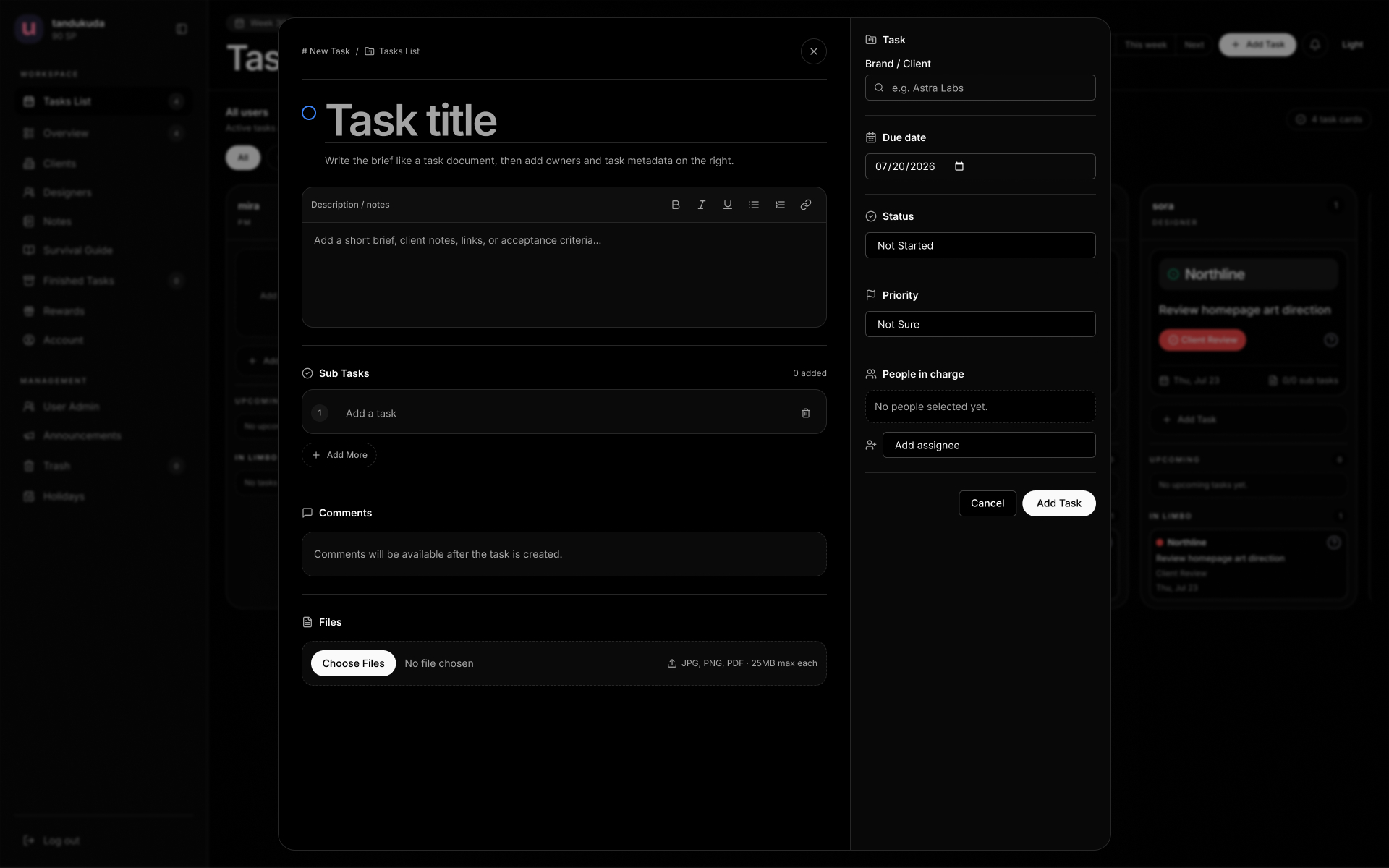
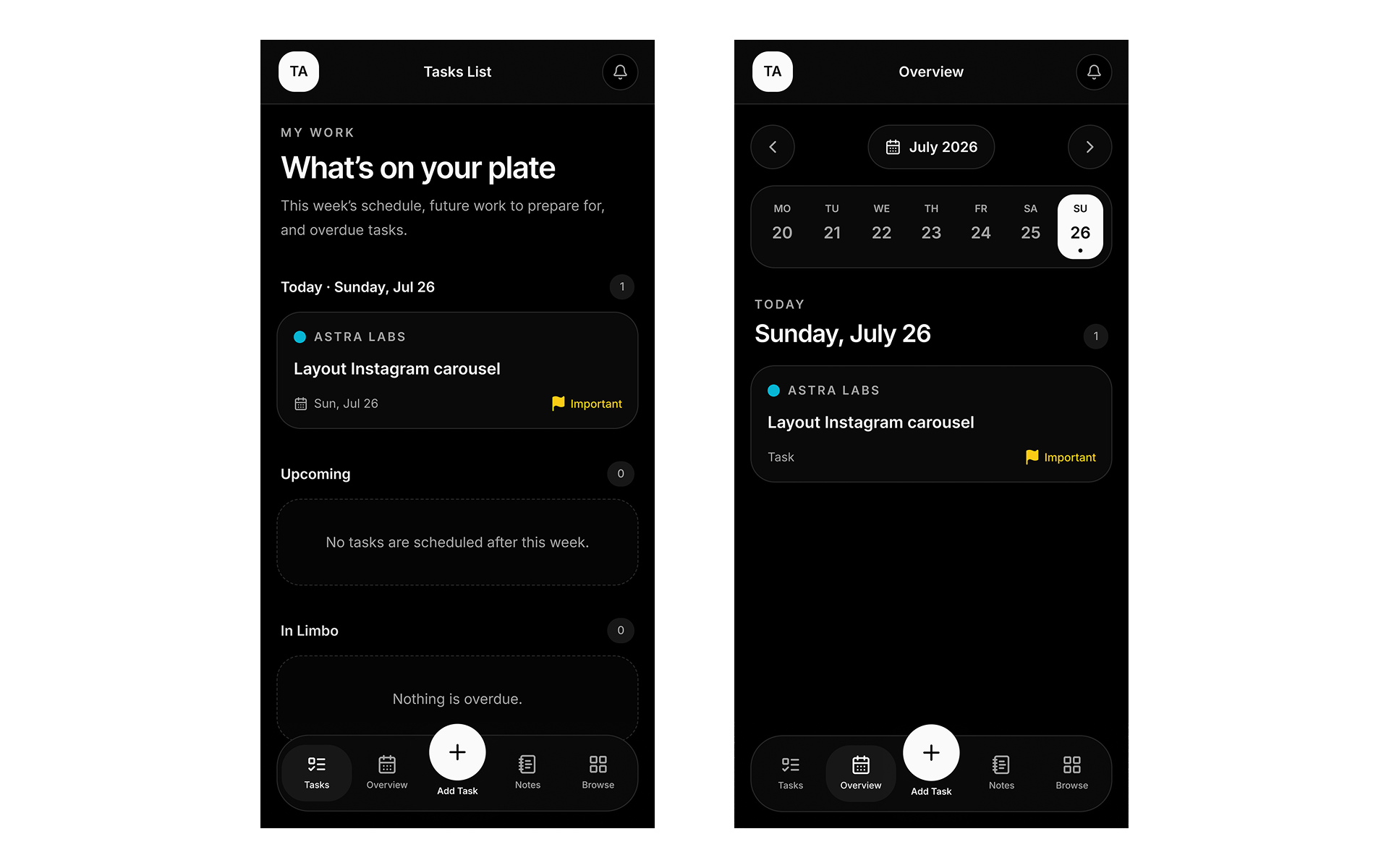
The starting point was mobile. Most of the team checks tasks on their phone, so the daily experience had to work at that scale first. This meant a focused task list for today and upcoming work, a calendar-style overview for reading workload at a glance, and a task creation flow that felt fast rather than form-heavy.
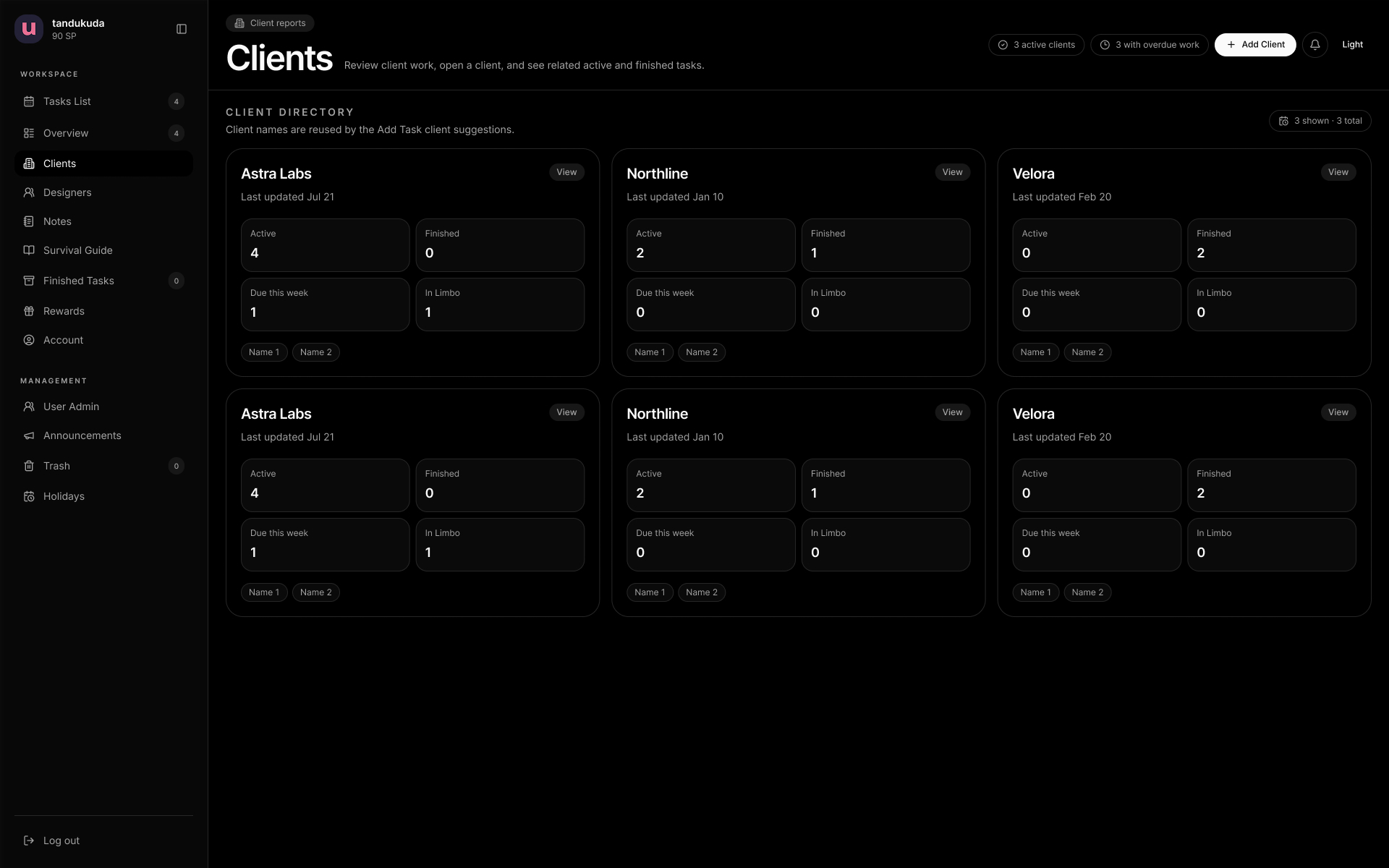
Structure followed from there. Projects, clients, and assignees were built into the core data model so context was never separate from the task itself. Priority, status, and assignments were kept visible by default rather than hidden behind extra clicks.
The self-hosted deployment was a deliberate decision, not a technical preference. Keeping the app on the studio’s own infrastructure meant full control over data, uploaded files, and how the system evolved over time. The visual system was treated with the same intention: it needed to feel like a product the studio owned, not a reskinned admin panel.
Scope
- Task management
- Daily overview and calendar-based task view
- Project and client organization
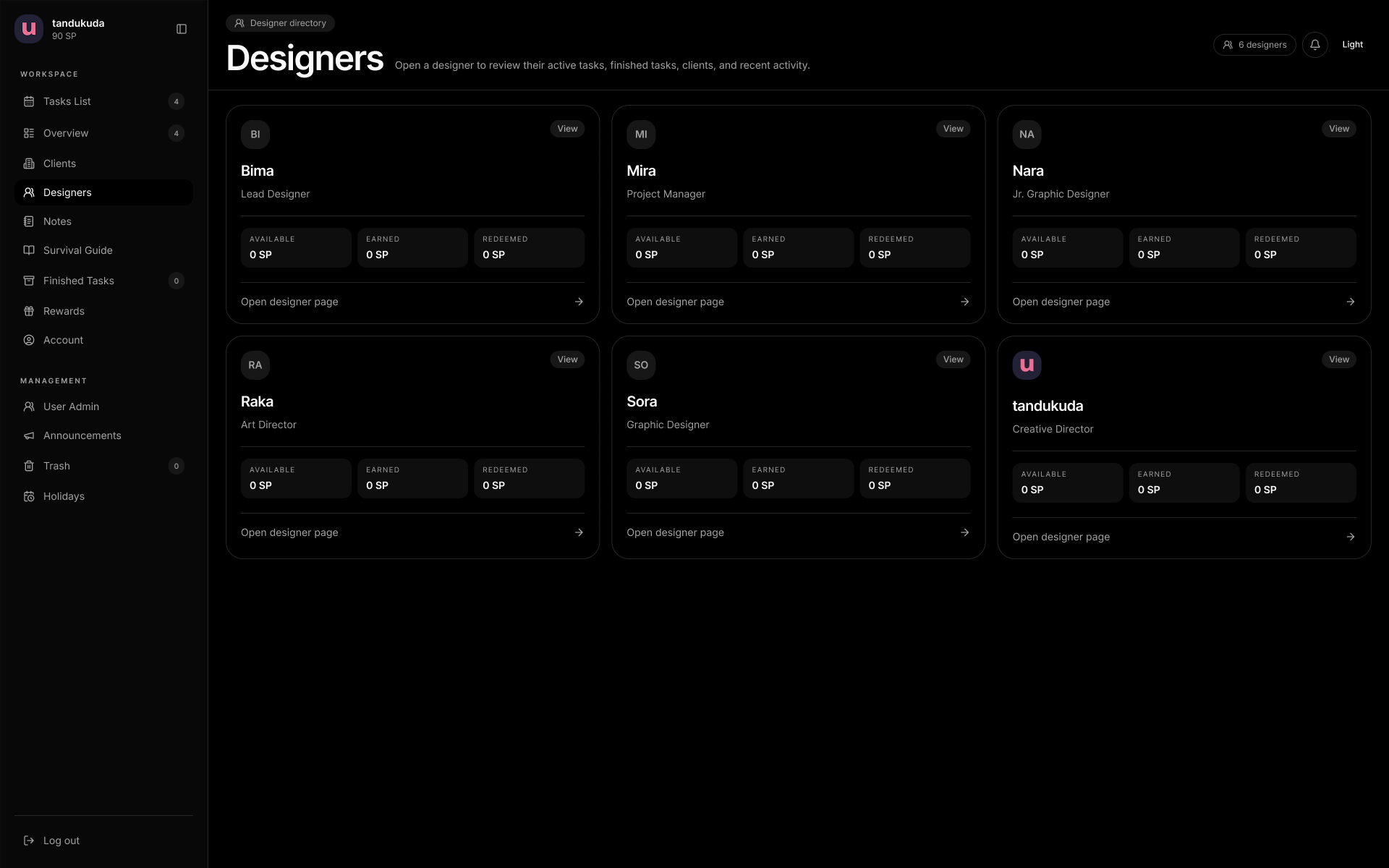
- User and assignee management
- Priority and status tracking
- File upload support
- In-app notifications and realtime updates
- Studio Points, theme unlocks, and admin-managed rewards
- Internal survival guide/help content
- Mobile navigation and task creation flows
- Self-hosted deployment with database and upload backup planning
Out of scope by design:
SCI-Kanban was built specifically for Sciencewerk and is not intended as a SaaS product for other studios. Every task is meant to be recorded and tracked manually by the team, so complex automation was deliberately excluded to keep the workflow transparent and human-driven. Feature parity with enterprise platforms was never a goal since the tool is scoped to the studio’s actual daily habits, not a generalized use case.
Outcome
SCI-Kanban replaced the studio’s previous coordination setup and is now the team’s primary internal tool for daily work. The shift from scattered third-party platforms to a single self-hosted system reduced the manual follow-up that project managers previously relied on to track daily progress.
The product was designed, built, and deployed end-to-end by one person, covering interface design, database modeling, authentication, file storage, Docker deployment, and backup strategy. That full ownership meant every decision, from the role permission model to the mobile navigation layout, was made with the studio’s actual habits in mind rather than inherited from a template.
The latest mobile version centers around a task list for Today and Upcoming work, paired with a calendar-style overview for reading daily workload at a glance. Task creation was redesigned as a grouped-field flow with sticky actions, so adding a task from a phone feels fast rather than laborious. Bottom navigation keeps movement between core sections immediate, and the internal guide content woven throughout gives the product a tone that feels distinctly Sciencewerk rather than off-the-shelf.
The strongest value comes from workflow fit, self-hosted control, and a visual language tailored to Sciencewerk.
Notes
SCI-Kanban is still evolving. The next phase focuses on reducing friction in the most repeated workflows: creating tasks, updating status, assigning people, commenting, uploading files, and checking daily workload.
Planned improvements include tighter mobile form density, better scroll padding around bottom navigation, and restore documentation for backups.
The project is also a practical exercise in connecting product design with full-stack development: interface design, workflow structure, authentication, database modeling, deployment, file storage, and backup planning all have to work together.
Credits
Concept, design, and development by tandukuda, for Sciencewerk.